A perspective that transforms the quality of every training
Facilitating a training and thinking “lack of engagement”?
Participant: Fidgeting. Not making eye contact. Doodling in a notebook. Silent. Needs extra time to answer. Standing up and pacing the room.
What do you think as a trainer? Lack of attention? Low motivation? “A difficult participant”?
What if this person simply processes information or regulates sensory arousal this way?
Not every participant will tell you what they need. Sometimes they don't know themselves. Sometimes they spent years masking so nobody notices.
Neurofriendly Learning Design
Learn how to design training sessions with neurodiversity in mind and walk away with an actionable checklist for your next workshop.
This isn't a niche edge case. It's the reality of your training room.
Neurodiversity means that our brains differ in how they process information, regulate attention, respond to sensory stimuli, communicate, and learn.
ADHD, autism spectrum, dyslexia, and sensory sensitivity are not deficits in need of 'fixing' — they are natural variations of the human nervous system. Consider the official data:
of the population is neurodivergent
Estimates suggest 15–20% of the population may be neurodivergent. Deloitte cites this exact range while noting the challenge of precise sizing.
of the population has dyslexia
Estimated proportion of the population with dyslexia according to official data from the British Dyslexia Association.
adult ADHD prevalence estimates
Broad estimates for adult ADHD depending on diagnostic criteria: ~2.58% for persistent childhood ADHD and 6.76% for symptomatic adult ADHD.
1 in 5 participants in your workshop group may be neurodivergent.
You don't need to know who has which medical diagnosis. You just need to know that diversity is already in your room.
You already facilitate sessions for neurodivergent participants. Even if you don't realize it.
It's easy to misinterpret these behaviors as a lack of attention, motivation, or respect. More often, it's a signal that an element of your workshop design demands too much cognitive energy.
"Someone remains completely silent during the training, then submits the highest-quality assignment in the group."
* Impact: Trainer feels frustration, participant feels judged and withdraws even further.
I will share practical design patterns and safe methods to assess participant needs so you can continuously refine your sessions.
Workshop Agenda: 4 Practical Blocks
Neurodiversity Perspective & Decoding Classroom Behaviors
Neurodiversity in the Room
Look at your training through the lens of neurodiversity and four cognitive profiles. You will begin noticing subtle dynamics that were previously invisible, understanding how distinct cognitive, sensory, and communication needs shape participant experience.
Alternative Behavior Interpretations
We will explore specific classroom behaviors associated with ADHD, autism, or dyslexia — without diagnosing or labeling. You will stop automatically interpreting them as disengagement and recognize alternative drivers, enhancing psychological safety for both you and your attendees.
Cognitive Load & Conscious Engagement Design
Cognitive Load Awareness
Gain a rigorous understanding of extraneous cognitive load and why managing cognitive friction is paramount when architecting adult learning journeys.
Diverse Information Processing Modes
Examine pacing, instructions, sensory stimuli, and interaction formats through the lens of diverse attention spans. Select engagement modalities intentionally rather than defaulting to what works only for your own brain.
Before → During → After Learner Journey & Mini-Audit
The End-to-End Learner Experience
Walk through the complete participant journey: from invitations and transparent agendas, through content scaffolding and break pacing, to post-session materials and follow-up.
Implementation & Concrete 2-Week Action Plan
Your Training Under the Microscope: Changes for Next Week
Conduct a rapid mini-audit of one of your own real workshops. Walk away with 1–2 high-leverage adjustments ready to deploy in your upcoming session — not 'someday', but in two weeks.
What will you walk away with?
The live session ends, and you are left with a complete audit toolkit, an actionable 2-week implementation plan, and an entirely new facilitation mindset.
Audit Toolkit
Comprehensive practitioner resource pack ready to deploy:
- ✓Neurofriendly Learning Design Audit ChecklistPDF / Print
- ✓8-Dimension Participant Experience MapFramework
- ✓Inclusive Facilitation Principles & Micro-ritualsCheat Sheet
- ✓HD Recording (Standard: 90 days, PRO: 12 months)HD Video
- ✓Curated Scientific Sources & Further ReadingKnowledge Base
Personalized Action Plan
Actionable roadmap tailored to your next workshop:
- ✓START / STOP / CONTINUE Matrix for your own sessionsFramework
- ✓1–2 concrete quick-win adjustments for your next workshopQuick-wins
- ✓Psychologically safe routine for assessing group needsMethod
- ✓Eliminating sensory and agenda micro-stressorsPractice
EFFECT: New Paradigm
A lasting shift in how you design and facilitate:
- ✓No more labeling participants as 'difficult' or 'disengaged'Mindset
- ✓Consciously designing for the neurodiversity already in your roomStandard
- ✓Lower personal energy drain and calmer facilitation confidenceComfort
- ✓Higher authentic engagement and elevated room feedbackImpact
“You don't need this knowledge to facilitate special sessions exclusively for neurodivergent individuals. Rather, it enables you to design consciously for the diversity already in your room.”
It is not about diagnosing participants.
You don't need to know who in your room has ADHD, is autistic, or has dyslexia or dyscalculia. You have no right to ask, and you don't need that medical data.
What you need is something different: understanding how different people experience the exact same training environment and which design elements inadvertently create cognitive exhaustion.
- ✕We do not teach diagnosing participants or attempting to label who has ADHD, ASD, or dyslexia.
- ✕We do not map isolated behaviors to clinical conditions. We examine behaviors associated with diverse processing styles as clues to expand your pedagogical repertoire — not to label people.
- ✕We do not assume a single 'neurofriendly persona' or a rigid one-size-fits-all checklist for everyone.
- ✓Examine participant dynamics through a multi-dimensional lens — cognitive, sensory, communicative, and social.
- ✓Analyze diverse modes of learning and information retention and how instructional design can support rather than exhaust them.
- ✓Walk through the full BEFORE · DURING · AFTER journey: communication, content, pacing, interactions, instructions, breaks, and materials.
- ✓Identify cognitive friction in your own real training and choose 1–2 high-leverage changes ready for immediate testing.
Who this workshop is (and is NOT) for
We respect your time and development budget. We want to ensure that every participant in the room extracts immediate, high-impact value.
- ✓You facilitate training, workshops, developmental sessions, or share knowledge as:• internal or external business trainer / consultant
• HRBP · L&D professional · People & Culture lead
• facilitator of large interactive meetings & change initiatives
• leader · subject-matter expert - ✓You already have an established facilitation foundation and want to elevate cognitive accessibility and inclusion.
- ✓You need no prior knowledge of neurodiversity: that is precisely what we provide in this session.
- ✕You are looking for Facilitation 101: we assume you already know how to facilitate adult learners.
- ✕You seek clinical diagnosis or medical treatment advice for ADHD/autism: this is pedagogical, not diagnostic.
- ✕You are looking for a franchised curriculum to resell: you receive tools for your direct practice, not a commercial license.
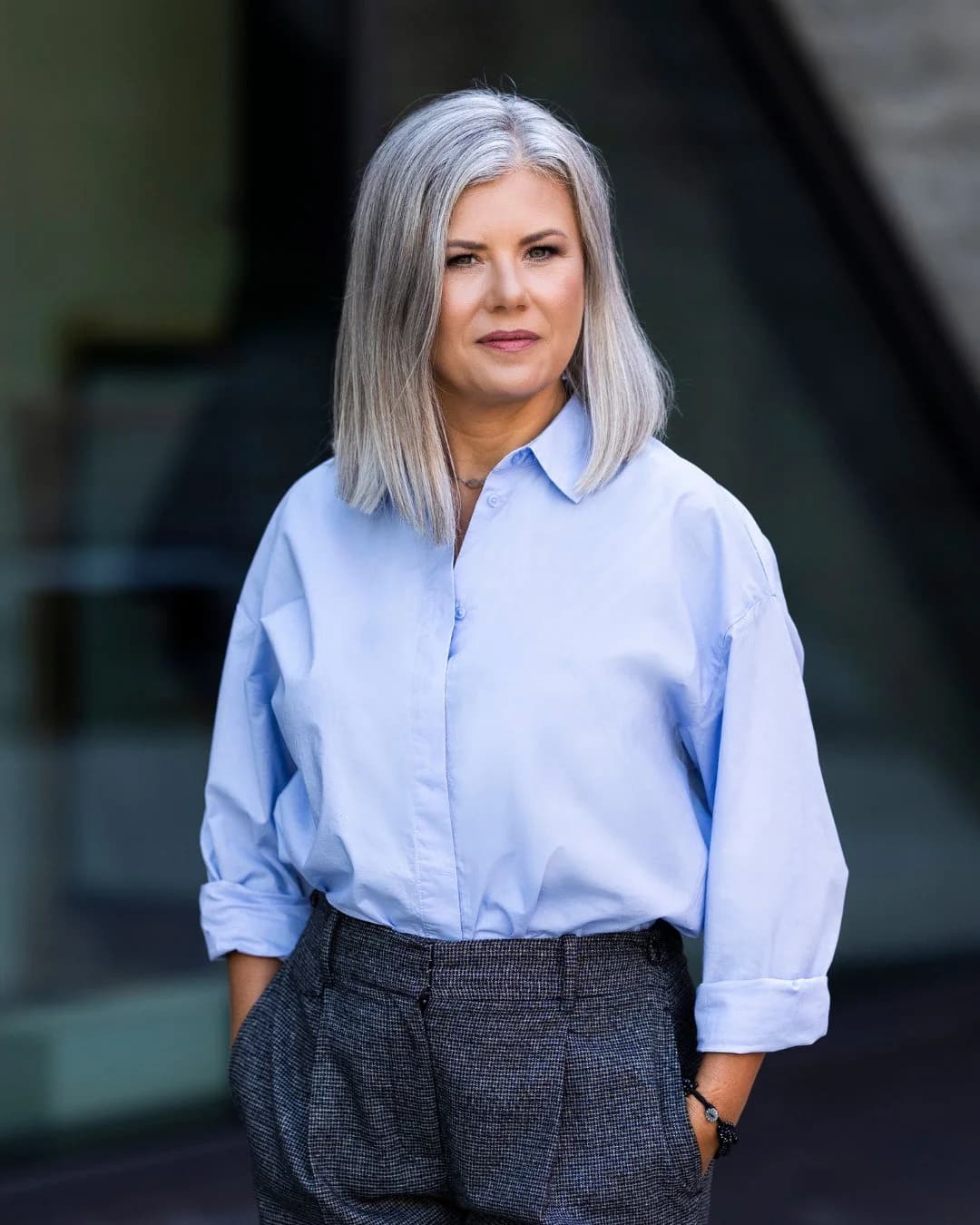
Asia Tonkowicz
Change Management • auADHD • diversi.pl
I won't teach you facilitation 101 (you already have that).
Asia Tonkowicz (she/her): for over 20 years, I have worked on organizational transformation: cultural changes, implementing new ways of working, operational routines, and business communication.
Every meaningful change requires engaging people — navigating their attitudes, psychological hesitations, and readiness to adopt new behaviors. Training, workshops, and facilitation have been central to my work for two decades.
I bring a perspective frequently missing in train-the-trainer programs: that of a change agent who treats learning as a behavioral transformation vehicle, asking one fundamental question:
To this change foundation, I integrate the neurodiversity lens: academic research coupled with the lived reality of an adult auADHD (autism + ADHD) diagnosis.
🎓 I completed postgraduate studies in „Neurodiversity in Management” at SWPS University, dedicating my thesis to cognitive energy in the workplace. The Neurofriendly Learning Design framework was born at the intersection of:
business × change management × adult learning × neurodiversity × Gallup strengths.
I partner with global enterprises as well as high-growth family companies. I publish on neurodiversity and neuroleadership at diversi.pl and author the Neurodiversity@Work newsletter.
Trusted by teams across leading global organizations:
What leaders, managers, and participants say about working with Joanna
Over 49 direct LinkedIn recommendations from leaders across premier organizations (including BCG, PwC, McKinsey, Deloitte, EY, Roche, KIDS&Co. and others).
Xenia Olajosova
VP | CMO | Global Marketing | Marketing Transformation | ex P&G | ex Berkshire Hathaway
Joanna facilitated an excellent CliftonStrengths workshop for our Strategic Marketing and Marketing Communications Center of Excellence team. Her deep knowledge of the framework, combined with practical examples and engaging breakout discussions, created a highly impactful learning experience. What I valued most was her ability to encourage meaningful reflection, which led to some of the most valuable insights and personal growth moments for the team. Joanna is a skilled coach who helps individuals and teams better understand and leverage their strengths.
Sylwia Bartodziej
Koordynatorka Flotowej Komórki Sprzedażowej
Współpraca z Joanną Tonkowicz to była jedna z lepszych decyzji rozwojowych dla naszego zespołu sprzedażowego. To nie było tylko kolejne szkolenie, ale przemyślany proces end-to-end, w którym czuliśmy się zaopiekowani na każdym etapie. Od pierwszego spotkania wstępnego (brief z menadżerami), przez sesje indywidualne, aż po warsztat zespołowy. Joanna ma niezwykły dar przekładania metodologii Gallupa na język codziennej pracy. Jako liderka otrzymałam od niej ogromne wsparcie. Pomogła mi zrozumieć, jak na bazie wyników testów budować autentyczny autorytet, lepiej zarządzać energią w zespole i wykorzystywać w dobry sposób zasoby ludzkie z ich talentami. Największe wrażenie zrobiło na mnie przejście od pracy indywidualnej do warsztatu zespołowego. To wtedy wszystkie „puzzle” wskoczyły na swoje miejsce, a my wyszliśmy z konkretnymi wnioskami końcowymi, które realnie stosujemy w praktyce.

Maciek Tkacz
Co-Founder and Managing Director at GOjump Trampoline Parks
Joanna prowadziła dla mojego zespołu liderek i specjalistów warsztat wypracowujący wartości, zachowania i rytuały w firmie, które usprawnią nam pracę, komunikację i zaangażowanie pracowników. Szkolenie bardzo merytorycznie, profesjonalnie poprowadzone, ale co najważniejsze z indywidualnym podejściem do tematu. Joanna potrafi zaangażować całą grupę, dać każdemu przestrzeń do wypowiedzi konstruktywnych. Dla mnie jako właściciela firmy - raport i wnioski po warsztacie są cenną dawką merytoryczną do planowania usprawnień. Mocno polecam! TOP EXPERT!

Aneta Świercz-Grądkowska
EMEA Head of Marketing Operations, Loyalty & Engagement
Sposób prowadzenia przez Joannę grup focusowych z pracownikami oceniam jako bardzo profesjonalny i niezwykle angażujący, z dużym poczuciem szacunku dla uczestników. Z perspektywy pracodawcy - dostałam wiele trafnych wniosków do adresowania i implementacji w miejscu pracy. Część warsztatów Joanna prowadziła online, jeden duży warsztat kreatywny z dyrektorami odbył się w biurze. Obie wersje - online i offline - oceniam bardzo wysoko. Szczerze polecam współpracę z Joanną!
This workshop embodies the very principles it teaches
It would be contradictory to demand workshop conditions from you that I wouldn't recommend when designing adult education.
Camera & Chat
Camera is completely optional; you can participate exclusively via chat. There will be no mandatory 'around-the-room introductions' and zero unexpected cold-calling.
Predictability & Agenda
You will receive the full agenda and materials in advance. You will know exactly what, when, and how we will work through each module.
100% Application Guarantee
Join the workshop risk-free. If after attending you feel you didn't gain actionable value to apply in your practice, email me within 7 days. I will refund 100% of your fee. No questions asked.
Choose the format tailored to your needs
Join an intimate open cohort or commission a dedicated transformation program for your company team.
Instead of the regular rate: 697 PLN.
Small cohort capped at 20 people. In return, I ask for your honest feedback after the workshop.
Live
Join the live workshop and walk away with a checklist and a visual summary. No recording.
Package includes:
Standard
Live workshop + 90-day recording access and the full template set. Take the workshop in easily, come back to it at your own pace.
Package includes:
PRO
Everything in Standard + an audit of your real training and a 1:1 session with Asia. Only 4 spots per cohort.
Package includes:
Looking for dedicated in-house training or audit for your team?
We deliver tailored keynotes, intensive hands-on workshops on client materials, and comprehensive Neuro_ID training ecosystem audits for HR, L&D departments, and internal trainers.
Frequently Asked Questions
Everything you need to know before enrolling in Neurofriendly Learning Design.
7-Day Full Money-Back Guarantee (100% Risk-Free)
If after completing the workshop you feel you didn't gain actionable value to implement in your own practice, email me within 7 days of the session. I will refund 100% of your payment, no questions asked and no explanations needed.
Reserve your spot or request a proposal for your team
Workshop “Neurofriendly Learning Design” — bank transfer with proforma invoice (7-day spot hold) or custom corporate proposal.